What is sustainable transport?
Transport is vital for promoting connectivity, trade, economic growth and employment. Yet it is also implicated as a significant source of green-house gas emissions. Resolving these trade-offs is essential to achieving sustainable transport and, through that, sustainable development.
In its 2016 report, the Secretary-General’s High-level Advisory Group defined sustainable transport as “the provision of services and infrastructure for the mobility of people and goods — advancing economic and social development to benefit today’s and future generations — in a manner that is safe, affordable, accessible, efficient, and resilient, while minimizing carbon and other emissions and environmental impacts.”
Sustainable transport is therefore not an end in itself, but a means to achieve sustainable development.
Sustainable transport, sustainable development
Sustainable transport — with its objectives of universal access, enhanced safety, reduced environmental and climate impact, improved resilience, and greater efficiency — is central to sustainable development.
Apart from providing services and infrastructure for the mobility of people and goods, sustainable transport is a cross-cutting accelerator, that can fast-track progress towards other crucial goals, such as eradicating poverty in all its dimensions, reducing inequality, empowering women, and combatting climate change.
Find out more about sustainable transport and sustainable development in this interagency report.

Your guide to climate action: Transport
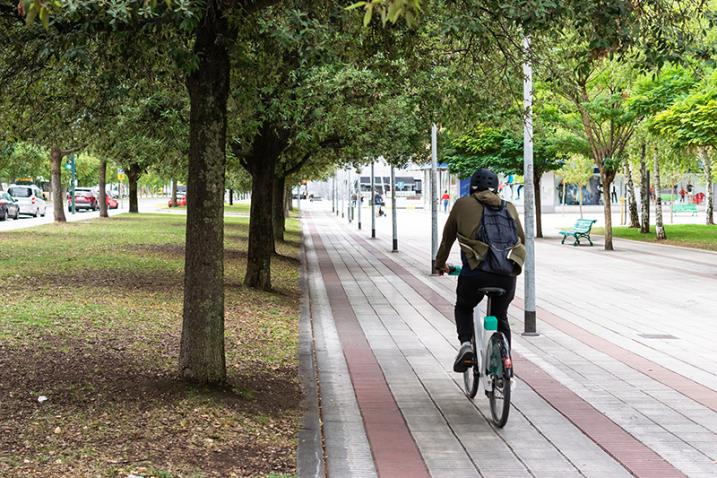
Whether it’s for work or for pleasure, the choices we make on how we get from one place to another — driving, flying, ferrying, biking, scooting, and public transportation — can have a large impact on carbon emissions. Making informed lifestyle choices when it comes to transport can help us reduce carbon emissions and improve air quality — a win-win!
Background
Recognizing the important role of safe, affordable, accessible and sustainable transport systems for all in supporting sustainable economic growth, improving the social welfare of people and enhancing international cooperation and trade among countries, the General Assembly decided to declare 26 November as World Sustainable Transport Day.
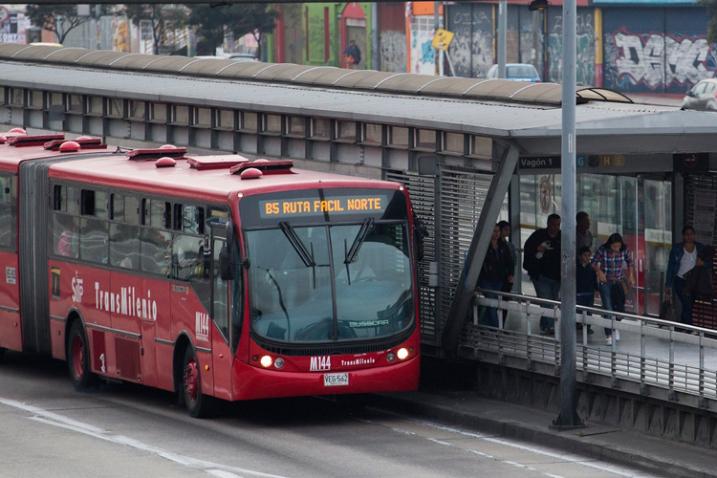
It also noted the importance of cooperation in enhancing transport connectivity through an integrated intermodal transport system by developing quality, reliable, sustainable and resilient infrastructure, exchanging best practices to optimize the development of interconnected highways, roads, streets, railways, waterways, airways, areas of modal transfer and ports, and by encouraging transport infrastructure construction and operations to minimize consumption of energy, land and other resources; generate lower emissions of greenhouse gases, ozone-depleting substances and other pollutants and ensure a positive social impact.
The Assembly invited stakeholders to mark World Sustainable Transport Day by means of education and the holding of events aimed at enhancing the knowledge of the public on sustainable transport issues, in particular enhancing intermodal transport connectivity, promoting environmentally friendly transportation, developing socially inclusive transport infrastructure and other aspects of transport sustainability.
Did you know?
- Globally, the average annual carbon footprint per individual is 5.9 tons.
- Living car-free can reduce your annual carbon footprint by up to 3.6 tons.
- Switching from a regular vehicle to an electric vehicle (EV) can reduce your carbon footprint by an average of 2 tons per year.
Events
Launch of Decade of Sustainable Transport, 10 December 2025, UNHQ New York
In 2023, the General Assembly declared the first ever United Nations Decade of Sustainable Transport to start in 2026. The launch of the UN Decade of Sustainable Transport will consist of an opening, a high-level segment, showcase of voluntary commitments, and an interactive multi-stakeholder roundtable. It will launch the Implementation Plan, which was developed by the United Nations Department of Economic and Social Affairs (UN DESA) in collaboration with the Regional Commissions and in consultation with Member States, the UN system and all other relevant stakeholders. The meeting will be open to all those in possession of valid UN Grounds Passes for the UNHQ in New York, up to the capacity of the Conference room. Representatives without a valid UN Grounds Pass could register to request Special Event Ticket through here before 2 December 2025.
How to beat the climate crisis with green transport
Resources
Resolutions
- World Sustainable Transport Day (A/RES/77/286)
- Decade of Sustainable Transport (A/RES/78/148)
- World Bicycle Day (A/RES/72/272)
- Integration of mainstream bicycling into public transportation systems for sustainable development (A/RES/76/255)
- Role of transport and transit corridors in ensuring international cooperation for sustainable development (A/RES/69/213)
- Towards comprehensive cooperation among all modes of transport for promoting sustainable multimodal transit corridors (A/RES/70/197)
- Strengthening the links between all modes of transport to achieve the Sustainable Development Goals (A/RES/72/212)
- Strengthening the links between all modes of transport to ensure stable and reliable international transport for sustainable development during and after the coronavirus disease (COVID-19) pandemic (A/RES/75/313)
Agreements
Websites
- Act Now
- Climate Action
- Global Issues — Health
- Global Issues — Climate Change
- United Nations Decade of Sustainble Transport
- United Nations Global Sustainable Transport Conference, 26-27 November 2016, Ashgabat, Turkmenistan
- Second United Nations Global Sustainable Transport Conference, 14-16 October 2021, Beijing, China
- UNECE: Transport
- UNECE: Climate Change and Sustainable Transport
- UNCTAD: Transport, logistics and trade facilitation
- UNCTAD: SDG Pulse
- Transport and trade connectivity in the age of pandemics